


A logistics, transport and communication, and business hub
About Astana
General Information
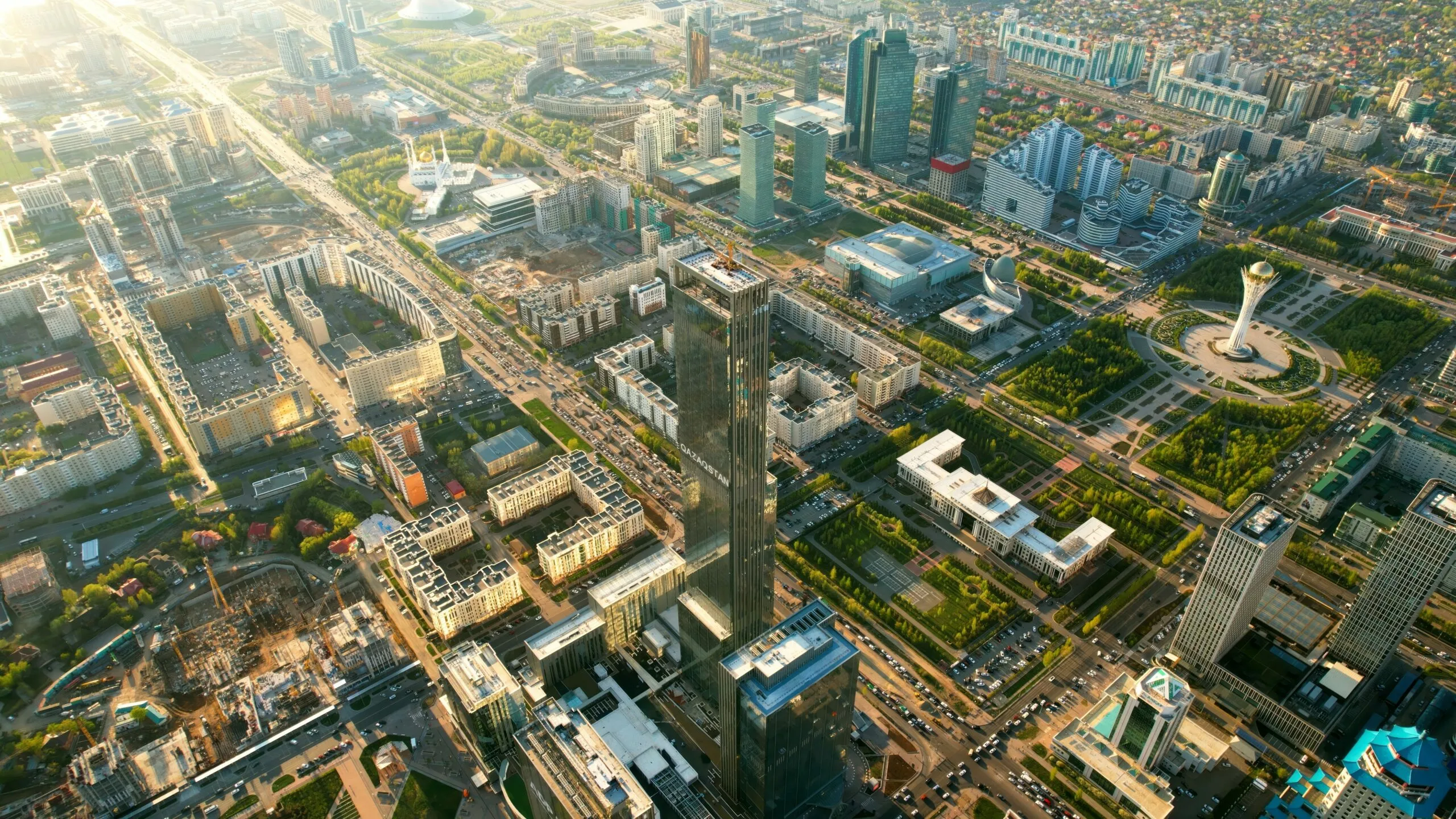
Astana has been the capital of the Republic of Kazakhstan since December 10, 1997. The city has significant geopolitical and economic importance: its favorable location in the center of Eurasia makes Astana a logistics, transport, communications, and business hub. Astana is a modern metropolis with unique architecture recognized worldwide, which makes the city attractive to residents, tourists, and investors

Astana has been the capital of the Republic of Kazakhstan since December 10, 1997

The city has significant geopolitical and economic importance

Population and Demographics
As of September 1, 2026, the population of Astana stands at 1,700,385 people.

01
During the first eight months of 2026, the natural population increase amounted to 13,517 people.

02
At the same time, migration makes a significant contribution: the migration balance for the same period is +47,692 people.

03

Это подчёркивает динамику роста города:
Economy and Socio-Economic Development
In January–June 2026, Astana’s gross regional product (GRP) at current prices amounted to KZT 8,919,589, while real GRP growth reached +5.6% compared to the same period in 2025.

01
Economic structure: ~18.6% – goods production, ~71.4% – services.

02
Industrial production from January to September 2026 increased by 38.7% compared to the same period last year.

03
The construction sector shows significant growth: the volume of construction works (services) during the same period increased by 22,5% compared to the previous year.

04
Investment in fixed capital in January–September 2026 amounted to KZT 1 879.4 billion, which is 13.1% higher than in the same period of 2025.
05
A large number of legal entities operate in Astana: as of October 1, 2026, 83 538 legal entities were registered, the majority of which are small enterprises.

06
Infrastructure, urban planning and amenities
Astana is a city with modern, large-scale development and infrastructure that meets the status of the capital: residential complexes, commercial buildings, and administrative institutions. The city is developing rapidly: housing construction is growing, residential and commercial real estate is expanding, which creates demand for services, real estate, business services, and urban comfort. Astana is becoming a center of business, cultural, and educational activity, attracting both Kazakhstanis from other regions as well as migrants, students, and professionals
The Importance of Astana for Business and Investment

Thanks to dynamic economic growth, the development of urban infrastructure, and convenient logistics, Astana remains attractive for investors and businesses, establishing its status as a key hub for companies targeting the capital market. The growth of small and medium-sized enterprises, as well as the high concentration of legal entities, reflects a well-established business environment that fosters new projects, startup development, and the strengthening of partnerships.

For organizations operating in the field of urban development and business activity, Astana is a strategically important platform: the population is steadily increasing, and the economy demonstrates high growth dynamics, creating ample opportunities for implementing investment initiatives and enhancing the overall attractiveness of the urban environment.
Prospects and Current Trends
Demographic growth and migration maintain a stable trend, indicating a further increase in population, an expansion of the labor market, and higher demand for services, housing, and infrastructure.

01
Economic growth, investment, and construction development create conditions for large-scale projects, urban development, business initiatives, and infrastructure improvements.

02
Comprehensive urban development — including architecture, modern residential and commercial areas, comfort, and business activity — makes Astana attractive both for living and for investment and business operations.

03
Investment Potential of Astana
Due to its location in the center of the Eurasian continent, Astana serves as a significant hub for transport and communication flows. The city acts as a key logistics corridor, connecting the markets of Europe and Asia.
1 700 385people
Population (as of September 1, 2026)
105,6%
GRP Index (January–June 2026 compared to the previous year)
3 292,1million $
Foreign direct investment (gross inflow, H1 2026)
15 071,9million $
Trade turnover (January–August 2026)